- Patient suffered one of the deadliest forms of heart attack on a remote offshore platform, more than an hour from the nearest hospital, yet JHAH’s teams reopened his blocked artery in just 61 minutes, around half the time international guidelines allow.
- Survival came down to a single unbroken chain: a remote offshore clinic, a helicopter, MEDEVAC, and a surgical team already prepared and waiting before he touched the ground.
_____________________________________________________________________________________
Dhahran, Saudi Arabia: It began as an ordinary shift for Jamal Abdullah Al Hilal, a 41-year-old Saudi Aramco worker on an offshore platform near Tanajib — until sudden, severe chest pain struck. More than an hour from the nearest hospital, he was in the critical early stages of a major heart attack, and his survival would depend on how quickly Johns Hopkins Aramco Healthcare (JHAH) could reach him.
The pain marked the onset of an ST-Elevation Myocardial Infarction (STEMI), one of the most serious and time-sensitive forms of heart attack, caused by a sudden, complete blockage of a major coronary artery. In such cases, every minute without treatment increases the risk of irreversible heart damage or death. For a patient so far away, survival would depend on a flawless, multi-stage rescue.
The response began immediately on the platform. The offshore medical team conducted an electrocardiogram (ECG), confirming the diagnosis and identifying a critical blockage. Initial treatment was administered on-site while an urgent helicopter medical evacuation (MEDEVAC) was activated to transfer Jamal to JHAH in Dhahran.
While the helicopter was on route, JHAH’s integrated communication network alerted the hospital in advance. The Emergency Department and the Catheterization Lab coordinated their response so the surgical team was fully prepared before the helicopter had even landed.
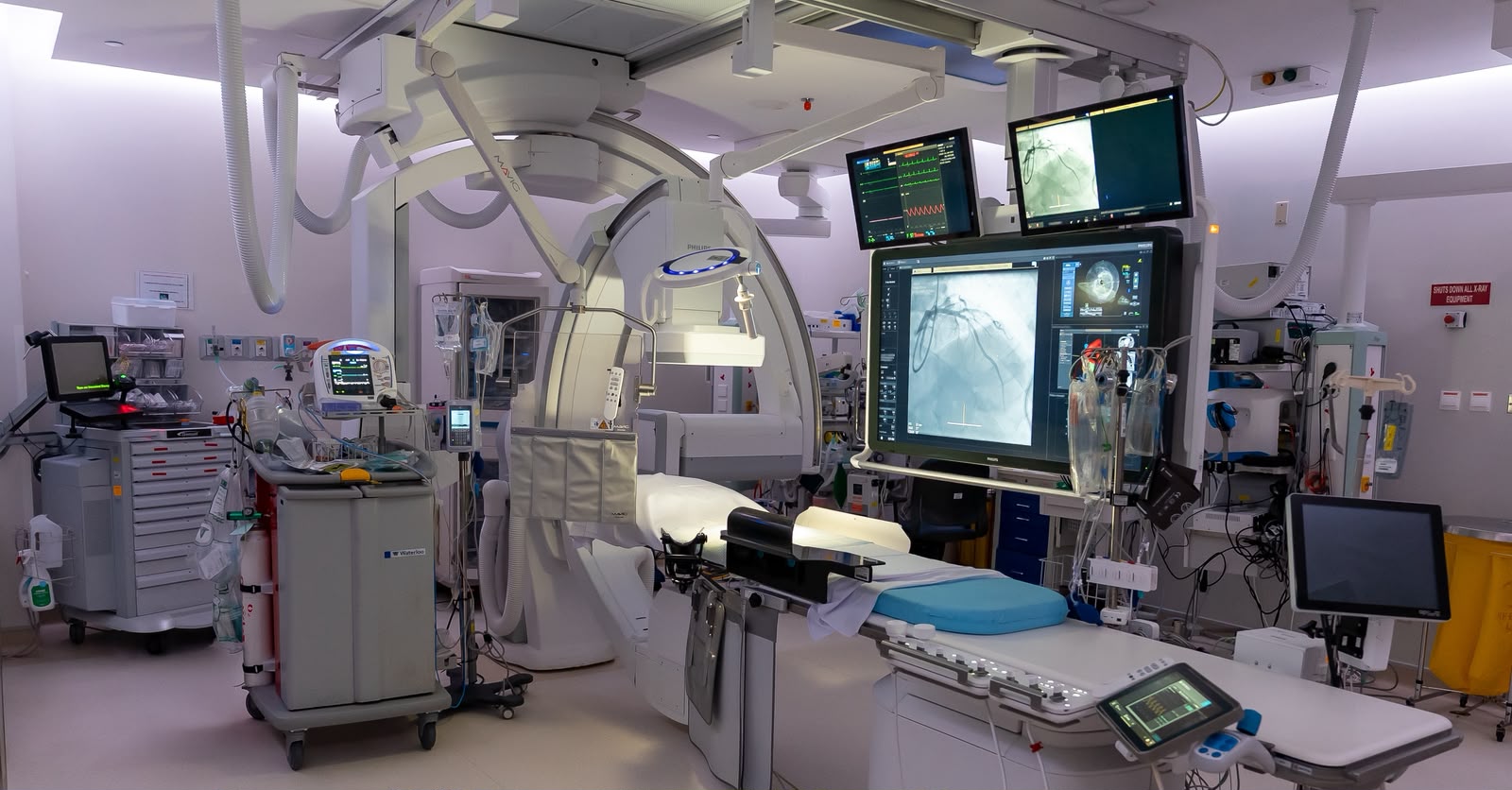
Upon landing, Jamal was transferred directly to the Cath Lab, where more tests revealed a complete blockage of the Left Anterior Descending (LAD) artery – the vessel that feeds around half of the heart’s muscle – often referred to as the “widowmaker” due to its high fatality risk.
Racing against the clock, the cardiology team performed a minimally invasive procedure, guiding a catheter through an artery in the wrist to reopen the blockage and placing a stent to restore blood flow. The intervention was completed in just 61 minutes, well within leading international benchmarks for heart attack care of 90 minutes.
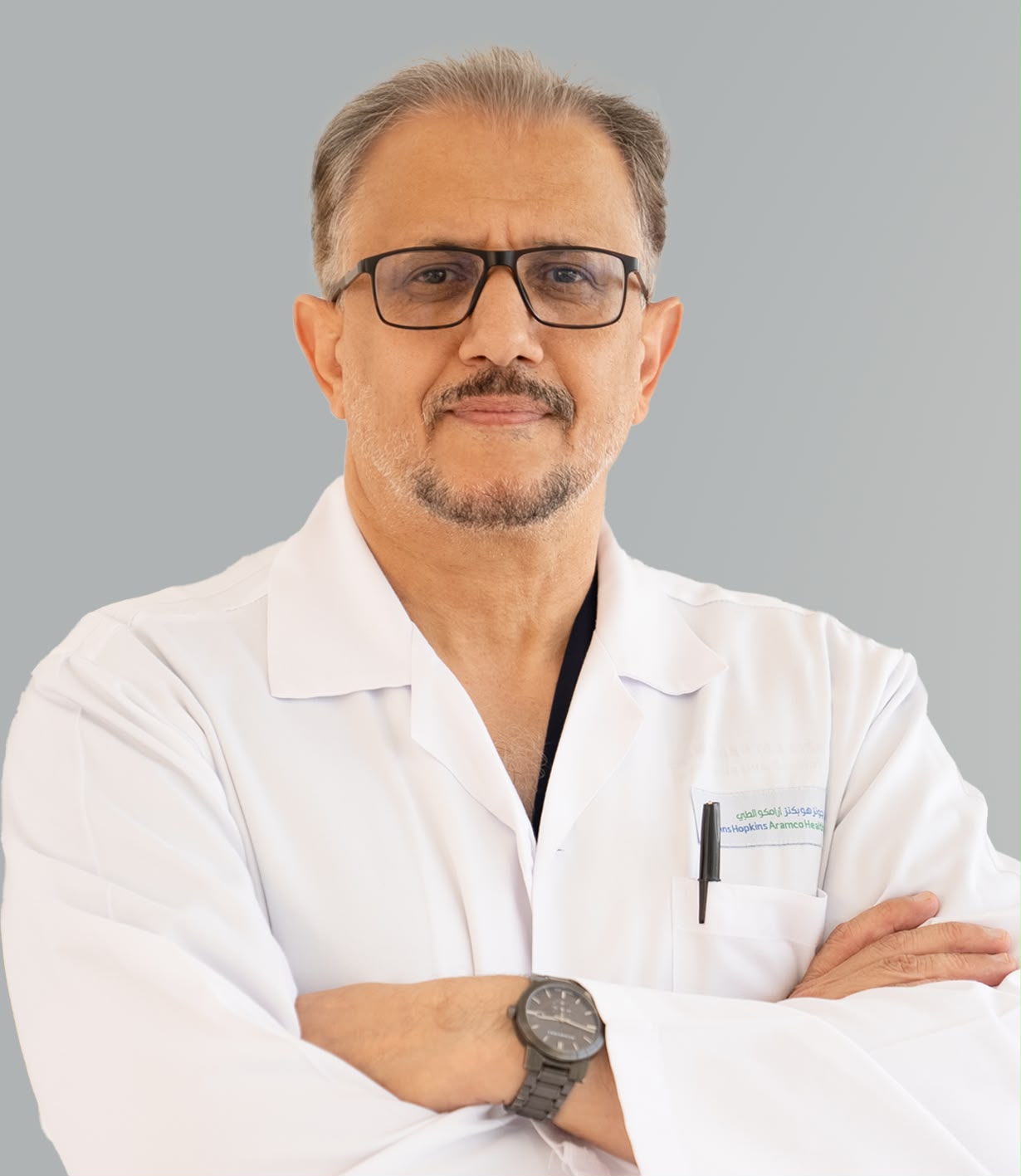
“In a case like this, the work that happens before the patient even arrives is what saves the life,” said Dr. Ali M. Shehri, Cardiology Consultant at Johns Hopkins Aramco Healthcare. “Because the offshore team recognized the heart attack early, started treatment and kept him stable in the air, our team was able to move with the speed and precision the moment demanded. We reopened the LAD artery in about one hour — well within a life-saving timeframe.”
Reflecting on his experience, Jamal said, “I always thought a heart attack was something that happened to other people, not to someone my age. I want others working in remote places to know how quickly things can change, and how much it matters to act fast. The care I received gave me my life back, and I hope my story reminds people not to ignore the warning signs.
Following the procedure, Jamal made a strong recovery and was enrolled in JHAH’s Cardiac Rehabilitation program — currently the only comprehensive program of its kind in the Eastern Province. Over six months, he received support across physical, nutritional and emotional recovery, before returning to work on the same offshore platform.
Cases like this highlight the unique challenges faced by remote and offshore workers, where access to immediate care is often limited. They also demonstrate what is possible when advanced healthcare infrastructure, rapid transport systems and highly coordinated medical teams operate as one.
For Jamal, it meant a second chance at life. For the teams who treated him, it is proof that distance no longer defines outcomes when healthcare systems are built to respond without delay.
————————————————————– END ———————————————————-
About Johns Hopkins Aramco Healthcare
Johns Hopkins Aramco Healthcare (JHAH) is a healthcare provider established in 2014 as a joint venture between Saudi Aramco and Johns Hopkins Medicine. The partnership combines Saudi Aramco’s long-standing healthcare legacy, dating back to the Saudi Aramco Medical Services Organization (SAMSO) in 1945, with Johns Hopkins Medicine’s global leadership in clinical innovation, cutting-edge medical research, and world-class medical education.
JHAH provides patient-centered care across multiple specialties, including cardiology, oncology, orthopedics, women’s health, pediatrics, mental health, neurology, and musculoskeletal care. It integrates advanced care models such as remote medicine, hospital-at-home services, and AI-enabled diagnostics to support accessible and effective healthcare delivery. JHAH has recently launched its Cardiovascular and Oncology Centers of Excellence, further strengthening specialized care services.
For more information, please visit: www.jhah.com and follow Johns Hopkins Aramco Healthcare on LinkedIn, Instagram, X, Facebook and YouTube.